REALITY DESIGNDec 8, 2025
What we know but can't articulate
Ever have that itch in your brain, like you could almost put it into words but it's beyond reach? It's strange how some truths we just feel with no language to wrap around them, like they've always been there, waiting to be discovered.

Mitch
Reality Designer
2min
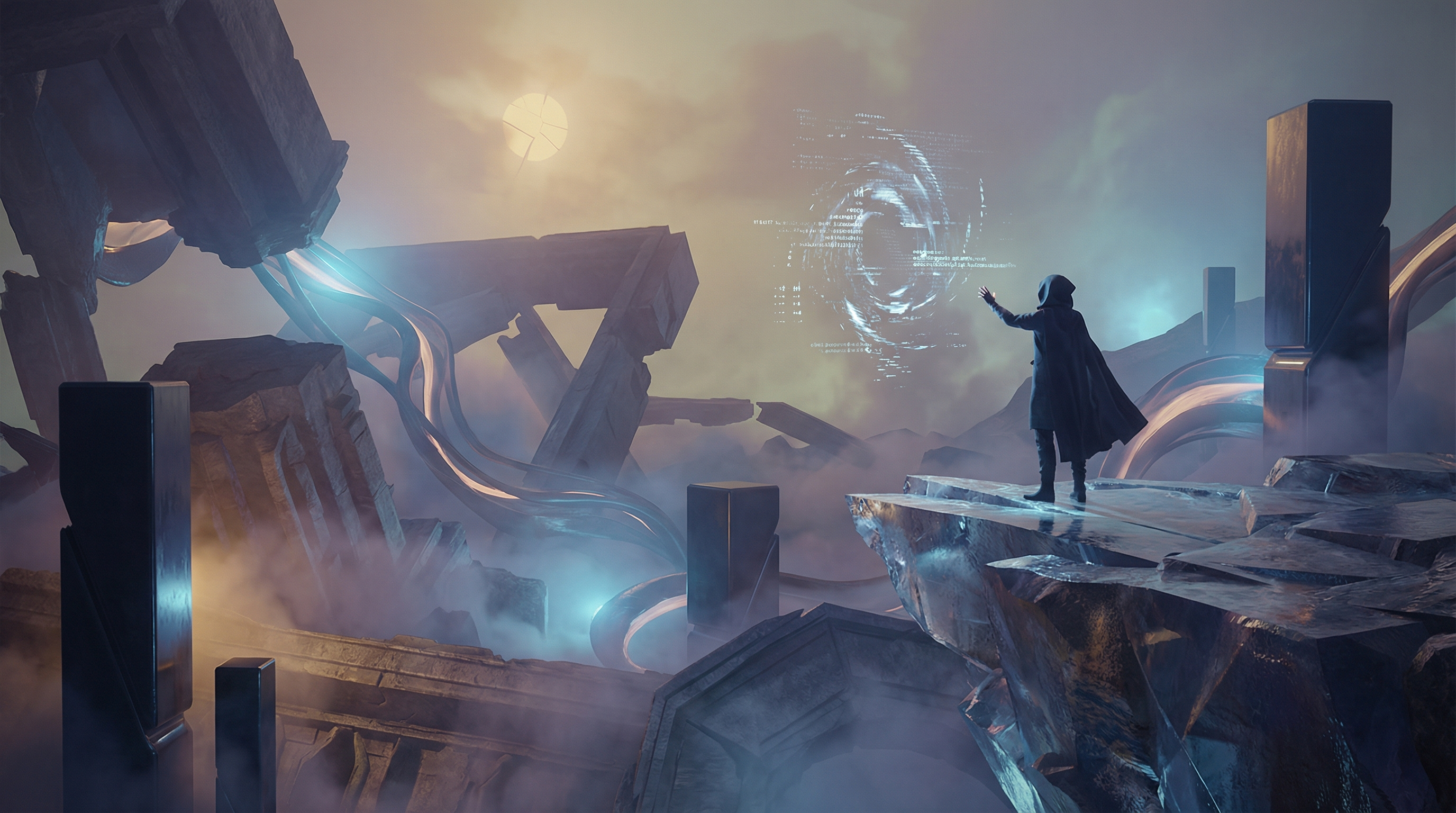
You ever get that feeling where you know something, deep down, but can't quite put it into words? It's not new, not really. It's always been there, nudging, whispering. The sense that if you just sit with it long enough, it'll reveal itself. It's the curious interplay between the known and the unspeakable, a dance our consciousness keeps playing out. ConsciousnessPOST is weird like that. It holds both concrete and abstract in a delicate balance. Sometimes, the struggle isn't in understanding, but in articulation. Thoughts form, ideas gel, and yet, when you try to verbalize them, they slip away, like sand through fingers.
Our brains, those convoluted masses of neurons, are remarkable at pattern recognition. You see a face in the clouds, hear a melody in a random noise, feel a déjà vu when you're in a place you've never been before. This instant recognition of patterns is part of our survival toolkit, honed over millennia. But while everything we perceive is filtered through this incredible machine, not everything is designed to be expressed. Some things just are, right? They're felt, intuited, understood without the need for verbal confirmation. It's like trying to describe the emotion that swells when you hear a particular note of music. You know it, you feel it, but words fail you.

It's funny, isn't it? How we place so much emphasis on language, on the ability to articulate thoughts. Yet some of the most profound insights come not from speech but from silence, from the spaces between words. Consider the modern obsession with quantification, everything must be measured, assessed, validated with data. But life doesn't always fit into neat rows and columns. There's an entire undercurrent of knowledge that's slippery, amorphous, like the half-remembered dreams that flit away upon waking. This is tough for folks who think everything must be pinned down with precise words.
Technology pushes us further in this direction, always probing for the next great articulation, the groundbreaking articulation of ideas previously unexplainable. TechnologyPOST has reshaped how we capture those ideas, even giving a voice to things once unspeakable. But has it really helped us articulate what was already in our bones? Or has it just added layers of noise to sift through? It's a double-edged sword, this digital age. We're more connected, sure, but are we really closer to understanding? It's like we're building a tower of Babel all over again, where the very tools meant to bridge gaps end up creating more of them.

Consider the way different cultures approach time. Western societies often view it linearly, a straight arrow moving inexorably forward. In contrast, many Indigenous cultures see time as cyclical, a constant loop where past, present, and future coexist. These contrasting perceptions aren't mere philosophical musings; they deeply influence how we live, how we view our place in the world. PerceptionPOST shapes reality. And yet these ingrained understandings of time are often things we 'know' more than things we can easily explain. It's like trying to describe a color you've never seen to someone who's colorblind.
It's not just abstract concepts that elude verbal capture. Think about relationships, about feelings of love or connection. We write poems, sing songs, tell stories, all in an attempt to encapsulate the elusive, the transient. But isn't it always inadequate? No sentence, however beautifully crafted, can fully communicate the depth, the entirety, of an experience. Maybe that's why we keep trying, though. It's the attempt that matters, the act of reaching, of trying to pull the ineffable into the realm of the describable.

When you stop to really think about it, this gap between knowledge and articulation isn't a flaw. It's part of what makes us human. There's something oddly comforting in not being able to fully explain every corner of our consciousness. It leaves room for growth, for mystery, for wonder. Maybe certainty is overrated. Maybe it's the questions, the mysteries, the bits that slip through our cognitive fingers, that drive us forward. It’s this tension between knowing and not-knowing that keeps us curious, keeps us exploring.
The real treasures are often hidden in the things we cannot express, the mysteries lingering just beyond the reach of words.
That's what makes creativity so intoxicating. It's a dialogue between the conscious mind and the subconscious, an ongoing conversation that defies grammar and syntax. CreativityPOST is the bridge, the translator between these worlds. An artist paints what words cannot describe. A composer writes music that communicates what speech cannot convey. In these acts of creation, language becomes a medium, not a barrier. We tap into something larger, something ancient and unnameable, and in doing so, expand the realms of our expression.
And then there's the role of philosophy. Here's a discipline consumed with questions that might not have answers, inquiries that dance around the edges of comprehension. PhilosophyPOST isn't about finding solutions but about continuing the quest, challenging the boundaries of what we know and what we believe we know. These are exercises in framing the unframed, shedding light on the shadows in our understanding. It's the act of grappling with these paradoxes that enriches our lives, that gives texture to our reality.
And isn't that what keeps us moving? This constant interplay between certainty and doubt, between knowing and not-knowing? The older you get, the more you realize that it's not about finding definitive answers. It's about learning to live with the questions, to find comfort in the ambiguity. Maybe that's what wisdom truly is, not the accumulation of facts or the ability to articulate every thought. But the understanding that there are some things you'll never fully grasp, and that's perfectly okay.
This interplay extends beyond us, moving into the realm of design and systems thinking. The whole notion of systems thinkingPOST is to see beyond individual components, to understand the whole as more than the sum of its parts. It's the recognition that our world is an intricate web of interconnections, some visible, many not. Design thinking operates on similar principles: empathizing with users, understanding needs that often remain unstated. Sometimes the most valuable insights come from unspoken understanding rather than explicit communication.
Consider communities, organic systems of human interaction. They're built on shared experiences, unspoken agreements, silent understandings about what's acceptable and what's not. Community and relationshipsPOST aren't just formed from commonalities; they're sustained through the silent dance of recognition and empathy, more a language of gestures than of words. The bonds that tie us together are often not the ones spoken aloud but the silent agreements that echo between us. It's intriguing, how much weight these silent bonds carry, how they form the backbone of trust, the foundation of connection.
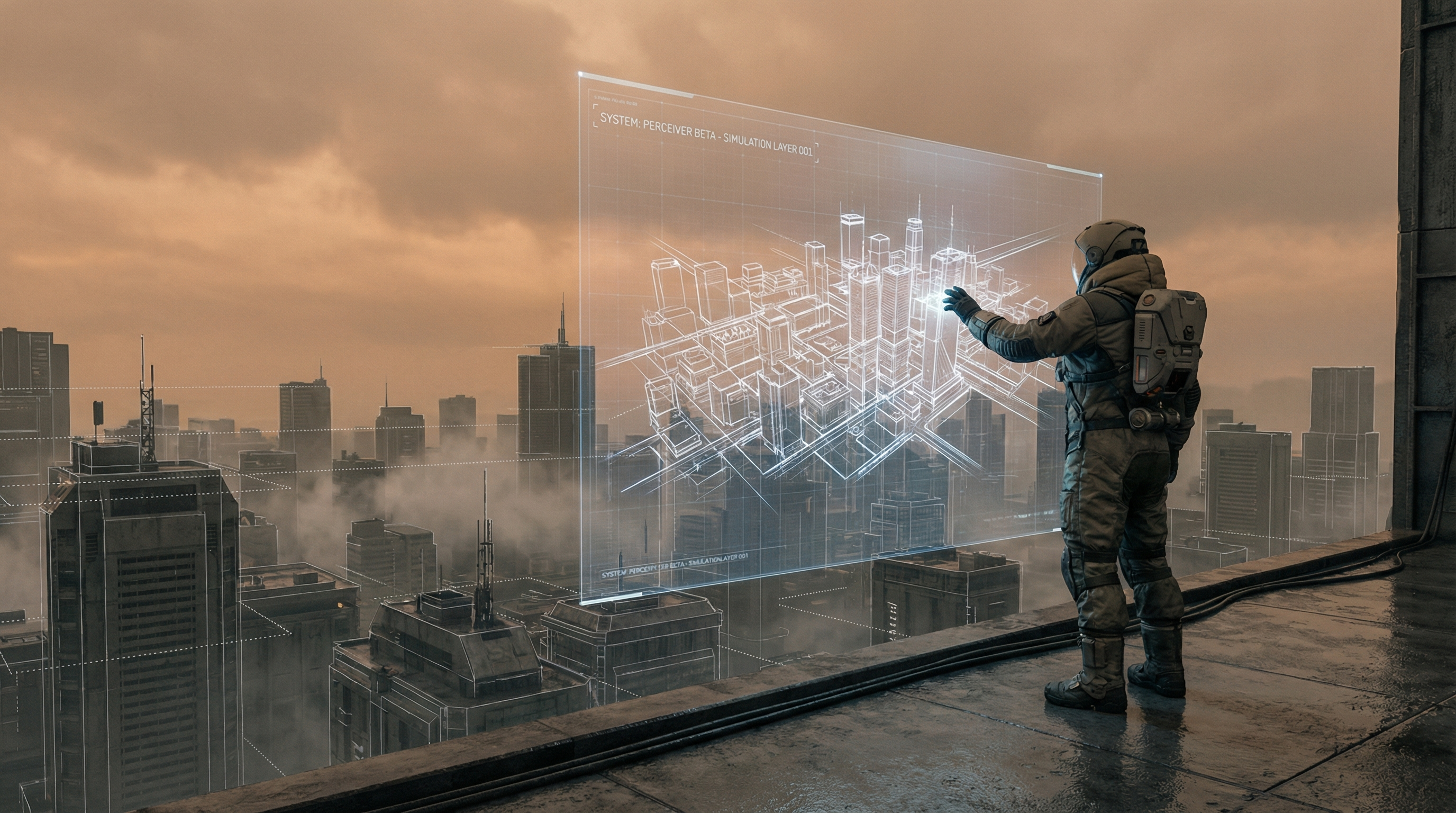
So what do we do with this awareness, this knowledge that some things resist articulation? Maybe it just is, and perhaps that's the beauty of it. It's not an indictment of language but a celebration of our capacity for understanding, despite the limitations of words. As we navigate our lives, perhaps the real challenge isn't in trying to articulate everything, but in learning to appreciate the unarticulated. Knowing that just because something can't be easily expressed, it doesn't mean it's any less real, any less important.
There's value in the struggle to communicate what's deeply felt, to translate the ineffable into something tangible. But there's also value in embracing the silence, in recognizing the boundaries of our understanding. IntuitionPOST plays a significant part, too. Listening to that inner voice, that silent guide that nudges us in the right direction when our conscious mind is lost in the noise. It's a different kind of knowledge, one that's more felt than thought, more intuited than explained.
It leads you to wonder, doesn't it? If some truths are meant to be known but not explained, what else lies beyond our grasp? What silent understandings, what unknown sketches of reality, hover just out of reach? These things, they don't fit neatly into the compartments of logic, nor should they. Maybe that's the point, to remind us that there's more to life than what we can explain. Where does that lead us, this journey into the heart of the unnameable, the silent dance of comprehension that eludes description?
